This is something that one of my early professors taught at BYU-Idaho. I had forgotten about it until now. Well, that's not entirely true. I had put it on my Facebook notes, which is where I found it recently. After forgetting about it entirely, I found it again. I am putting it now in this blog so that it is more accessible to everyone who wishes to view it. Enjoy the reading. Feel free to disagree or agree as you choose.
1. All truly inspired ideas come from God, and the
consciousness of being inspired by him. Your religiosity will make you
more conscious and aware of that fact, and of the fact that God is
nearer to you than others in your craft, and that you can consort with
him without fear.
2. The contact of inspiration though God
cannot be done merely by will power working through the conscious mind,
which is an evolutionary product of the physical realm and perishes with
the
body. It can only be accomplished by the soul-powers within - the real ego that survives bodily
death. Those powers are quiescent to the conscious mind unless illumined by Spirit.
3.
To realize that we are one with the Creator, as Beethoven did, is a
wonderful and awe-inspiring experience. Very few human beings ever come
into that realization and that is why there are so few great composers
or creative geniuses in any line of human endeavor. All this should
always be contemplated before commencing to compose. This is the first
step.
4. When the urge to compose is present, appeal directly to the Maker and ask Him three most
important questions pertaining to our life here in this world - whence,
wherefore, whither [woher, warum, wohin]? This appeal will immediately
manifest feelings of vibrations that will thrill your whole being. These
are the Spirit illuminating the soul-power within, and in this exalted
state, you can clearly see what is obscure in your ordinary moods; then
you feel capable of drawing inspiration from above, as Beethoven did.
These vibrations assume the forms of distinct mental images, after you
have formulated your desire and resolve in regard to what you want -
namely, to be inspired so that you can compose something that will
uplift and benefit humanity - something of permanent value. Straightaway
the ideas will flow upon you, directly from God, and not only should
you see distinct themes in you mind's eye, but they also will be clothed
in the right forms, harmonies and orchestration. Only with divine
inspiration will finished product be revealed to you, measure by
measure.
5. Most of the time you have to be or will be in a semi-trance condition to get such results - a
condition
when the conscious mind is in temporary abeyance and the subconscious
mind, which is part of Omnipotence, that the inspiration comes; and to
be careful, however, not to lose
consciousness, otherwise the
ideas will fade away. That is the way Mozart composed, and when asked
what the process was with him while composing, he replied: "The process
with me is like a vivid dream". He then went on and described how ideas,
clothed in the proper musical setting, streamed down upon him. God and
His Omnipotence, His awe-inspiring grandeur. His glory, and above all
his closeness to you are things that should be pondered on just before
commencing to compose. It is most stimulating and inspiring process to
think along those lines before entering that trance-like state in which
inspirations come.
6. The dream-like state is like entering a
trance-like condition - hovering between being asleep and awake; you are
still conscious but right on the border of losing consciousness, and it
is at such moments that inspired ideas come. Then it is of the utmost
importance to put the ideas down on paper immediately. Then they are
fixed and cannot escape; and when you look as them again, they conjure
up that same mood that gave them birth. This is a very important law.
Themes that occur this way usually are the ones that will endure.
7.
Spirit is the light of the soul. Spirit is universal. Spirit is the
creative energy of the Cosmos. The soul of man is not conscious of it's
powers until it is enlightened by Spirit. Therefore, to evolve and grow,
man must leam how to use and develop his own soul forces. All great
creative geniuses do this, although some of them do not seem to be as
conscious of the process as others. Beethoven was aware of the fact that
he was inspired and he left records to that effect.
8. All true inspiration emanates from God, and can reveal Himself through that spark of divinity
within - through that psychologists call the subconscious mind. Any
composer capable of entering into that state can create immortal works,
only in believing in which no less an authority than Jesus, Himself,
says, in John 14:10 "The Father that dwelleth in Me,
He doeth
the works, and in the 12th Verse of the same chapter. He adds, "He that
believeth Me, the works that I do shall he do also, and greater works
than these shall he do". All these things mentioned here have a direct
bearing on the mental, psychic and spiritual processes when attempting
to compose. The powers from which all truly great composers like Mozart, Schubert, Bach and Beethoven
drew their inspirations is the same powers that enabled Jesus to
perform His miracles. We call it God, Omnipotence, Divinity, the
Creator, etc. It is a power of All that created our earth and the whole
universe, and Jesus taught us that we can appropriate it for our own
upbuilding right here and now and also earn Eternal Life. Jesus is very
explicit in Matthew 7:7, saying, "Ask and it shall be given you, seek
and ye shall find; knock and it shall be opened unto you". There would
not be so much good music paper wasted in fruitless attempts to compose
if those great precepts were better understood. That is why atheists
works are utterly lacking in inspiration. Their works are purely
cerebral. The great Nazarene knew that law also, and He proclaimed it in
John 15:4, "The branch cannot bear fruit of itself, except it abide in
the vine." No atheist has ever been or will be a great composer.
Jesus taught us that there is true supreme hope for all. He came not as
the great exception, but as the great example for us to emulate.
Adherence to can create nothing but divine values and an alliance with
the Creator, that is capable of a life on earth full of inspiration and
masterpieces of music to accompany that life for others to witness. This
is the secret of inspiration; which is the ability to synchronize the
conscious and subconscious minds, just as Jesus did, but on a much
higher level.
9. Inspiration is of such importance in
composing, but by no means all that there is to it. Structure is just as
consequential, for without craftsmanship, inspiration is a 'mere reed
shaken in the wind' or 'sounding brass or tinkling cymbals'. Great
compositions are not the fruits of inspiration alone, but of severe, laborious and painstaking toil.
No composition will live long unless it has both inspiration and
craftsmanship, which Beethoven had to a superlative degree. There also
must be in relation, with inspiration and craftsmanship, a natural
aptitude, where ideas come to you with more or less no conscious effort,
with a sense of comfort and relative ease, like a aspiration
beingfulfilled. But parallel to that, as seen in Beethoven's
sketchbooks, comes the proof that he toiled incessantly in order to
leave us such masterpieces. Only with your religiosity. God's
inspiration, and the utilization of all three, can one achieve mastery
of classical music composition and achieve true fame and immortality,
which is what oblivion constantly tries to challenge. This is the proven
universal formula for success in music and any and all other endeavors
of human life.
10. Another aspect of this art which is extremely vital and demands great
emphasis, is privacy. It should be unthinkable of attempting to compose
unless you are sure you will not be interrupted or disturbed. The Muse
is a very jealous entity, and she will fly away on the slightest
provocation.
11. A composer who wishes to write worth-while music must devote his whole time and energy to that one occupation.
12.
A composer in order to study, learn and absorb all that the masters
have to offer, and put to use that knowledge in his own works, must have
the capacity to judge objectively an individuality that differs from
his own.
Wednesday, April 17, 2013

Tuesday, April 16, 2013
Chapter 11: Reflections (and ramblings) of Assistive Technology
So in order to help you understand the comments of this chapter, I have placed the source of my ideas in this blog. It is a video playlist about assistive technology. I think watching this video will help my ramblings make more sense. Be warned, this video playlist will take about 15-20 minutes-ish to watch fully. So watch the video (if you dare), then enjoy the ramblings.
So, the first person I want to ramble about is Lukas. Lukas is just awesome. He was born with a disease with a jaw-cracking name. I'm not even going to try to pronounce (or spell) it. But this disease did not stop him from learning to play euphonium! His assistive technology was a joystick that pressed the valves of his instrument because his limbs were too weak to do so themselves. By using this technology, he was able to participate in three different ensembles. That's the kind of student dedication I like to see!
Susanna, the first person mentioned in these videos, is a more common case. She uses a voice activated system on her laptop to help her do her homework. Voice activation is one of the more common tools that can be applied for assistive technology. Susanna impressed me with her ability to referee soccer from a wheelchair. Isn't that cool?
Vishal used an on-screen keyboard to type his homework, which I think is becoming more and more common as technology advances. Years ago, touch-screen technology (which makes an on-screen keyboard possible) did not exist. I am sure that all these students are grateful for these devices, because without them, schoolwork would have been much more difficult and stressful.
I am going to skip to the second video now, and ramble about Josh. Josh just wanted to read, but lacked the capability, until his teacher showed him Bookworm, and then he rapidly caught up to the rest of his class. It was kind of interesting to see how they discovered his interests and devised methods of permitting him to express those interests. What I thought was really cool, though, was how these devices actually improved his performance in the classroom and his sociability both in the home and at school.
OK, I think that's enough rambling for now. If my ramblings made sense without the videos, great. If not, watch the videos and then come back and see things click into place in your mind.
So, the first person I want to ramble about is Lukas. Lukas is just awesome. He was born with a disease with a jaw-cracking name. I'm not even going to try to pronounce (or spell) it. But this disease did not stop him from learning to play euphonium! His assistive technology was a joystick that pressed the valves of his instrument because his limbs were too weak to do so themselves. By using this technology, he was able to participate in three different ensembles. That's the kind of student dedication I like to see!
Susanna, the first person mentioned in these videos, is a more common case. She uses a voice activated system on her laptop to help her do her homework. Voice activation is one of the more common tools that can be applied for assistive technology. Susanna impressed me with her ability to referee soccer from a wheelchair. Isn't that cool?
Vishal used an on-screen keyboard to type his homework, which I think is becoming more and more common as technology advances. Years ago, touch-screen technology (which makes an on-screen keyboard possible) did not exist. I am sure that all these students are grateful for these devices, because without them, schoolwork would have been much more difficult and stressful.
I am going to skip to the second video now, and ramble about Josh. Josh just wanted to read, but lacked the capability, until his teacher showed him Bookworm, and then he rapidly caught up to the rest of his class. It was kind of interesting to see how they discovered his interests and devised methods of permitting him to express those interests. What I thought was really cool, though, was how these devices actually improved his performance in the classroom and his sociability both in the home and at school.
OK, I think that's enough rambling for now. If my ramblings made sense without the videos, great. If not, watch the videos and then come back and see things click into place in your mind.
Monday, March 11, 2013
Chapter 10: Music at its best
Enclosed in this chapter is an annotated video playlist that I created using the services of Youtube. The title of the playlist (and this chapter) is "Music at its best". I think the title says it all. It includes a video of a 3-year-old conductor, a recording of one of the best pieces of music ever written, and my own annotated video comments. Enjoy.
Annotated Youtube Playlist
Annotated Youtube Playlist
Monday, February 25, 2013
Chapter 9: Spreadsheets in the Classroom
After viewing a number of presentations teaching the use of spreadsheets, I can't figure out for the life of me how I would change these 'lessons' to fit the needs of my future band students. So I took a different approach, and decided to change them for my (future) Spanish students. This was much easier.
It seemed to me that the lesson I could most easily adapt to Spanish was a presentation on volcanoes. This lesson had the students look up some basic information about specific volcanoes, and input that info into a spreadsheet in order to create some graphs of comparison.
Now, I believe that volcanoes are very different from a foreign language. However, the principles taught using the spreadsheet are somewhat the same. Instead of the question, "how often does a volcano erupt?" I can ask the question, "what is the ratio of Spanish-speaking countries to the rest of the world?" Then I can show that information in a graph to make it easier to interpret.
I said that I couldn't figure out a musical application, but I figured a different spreadsheet might work better. So I used my own M&M Spreadsheet and changed it for instruments in the band room: How many of each instrument do I have, and how many of each instrument do I need? Or rather, how many players will I need? This could be useful at the start of the year when I am not sure what instrumentation I will have (student-wise that is) so I can show the students what I have and what I need. Then I would be able to ask students if they would like to learn a different instrument than one they already play and switch things up a bit. It is entirely possible that at our first rehearsal, I will have 20 French horns and zero tubas (yikes!). I can show this data to the students and ask for their cooperation and reduce the number of horns and put them on different, more necessary instruments (such as a bassoon).
I'm sure that I could figure out other ways to use a spreadsheet in a band room, given enough time and motivation, but those are things that I am somewhat lacking at present.
It seemed to me that the lesson I could most easily adapt to Spanish was a presentation on volcanoes. This lesson had the students look up some basic information about specific volcanoes, and input that info into a spreadsheet in order to create some graphs of comparison.
Now, I believe that volcanoes are very different from a foreign language. However, the principles taught using the spreadsheet are somewhat the same. Instead of the question, "how often does a volcano erupt?" I can ask the question, "what is the ratio of Spanish-speaking countries to the rest of the world?" Then I can show that information in a graph to make it easier to interpret.
I said that I couldn't figure out a musical application, but I figured a different spreadsheet might work better. So I used my own M&M Spreadsheet and changed it for instruments in the band room: How many of each instrument do I have, and how many of each instrument do I need? Or rather, how many players will I need? This could be useful at the start of the year when I am not sure what instrumentation I will have (student-wise that is) so I can show the students what I have and what I need. Then I would be able to ask students if they would like to learn a different instrument than one they already play and switch things up a bit. It is entirely possible that at our first rehearsal, I will have 20 French horns and zero tubas (yikes!). I can show this data to the students and ask for their cooperation and reduce the number of horns and put them on different, more necessary instruments (such as a bassoon).
I'm sure that I could figure out other ways to use a spreadsheet in a band room, given enough time and motivation, but those are things that I am somewhat lacking at present.
Wednesday, February 20, 2013
Chapter 8: Technology
My teacher went to a conference somewhere where some new, interactive technology was being modeled. There were three technologies that were being modeled: a Smart board, some 3D modeling technology, and a Smart Table.
The Smart board is in some classrooms already, but the expert who was modeling it demonstrated the different useful functions, such as 'multi-touch'. First of all, as a music teacher, a Smart board can be very beneficial in teaching theory and rhythm or even key signatures. Second, this 'multi-touch' feature would allow a teacher to create friendly competition between students. Personally, since I will be teaching high school band/music classes, I think using a music composition software in conjunction with the Smart board would be useful for a competition. It might be nice to see who can harmonize a melody faster, or more accurately. The Smart board/ composition software combo would be a very good way to show improvisation. I kind of like the idea of writing a melody on the spot without prior preparation.
Anyways, the 3D technology would be useful if you want to create your own instruments and/or take it apart without actually damaging the instrument. For instance, if a students wants to figure out how to re-string a French horn they can use this technology to figure out what string goes where and how it is attached to everything else before attempting it on their actual instrument. Side note: a student in my classroom should never, ever try to re-string a horn on their own. Take it to a professional, because there is less chance of irreparable damage. Like I said, this technology can be useful for looking at the interior of instruments (don't try it on an actual instrument!) or for designing new ones.
The Smart Table is more or less for cooperation and collaboration. I can't see a use for it in rehearsals or practicing, but composition is another matter entirely. Or if students need help with theory homework, they can collaborate with other students to figure out different ways of writing music without breaking any rules.
On an end note (no pun intended.... I don't think...), I think the Smart board would be the technology of choice in my classroom, but the Smart Table comes in a close second.
The Smart board is in some classrooms already, but the expert who was modeling it demonstrated the different useful functions, such as 'multi-touch'. First of all, as a music teacher, a Smart board can be very beneficial in teaching theory and rhythm or even key signatures. Second, this 'multi-touch' feature would allow a teacher to create friendly competition between students. Personally, since I will be teaching high school band/music classes, I think using a music composition software in conjunction with the Smart board would be useful for a competition. It might be nice to see who can harmonize a melody faster, or more accurately. The Smart board/ composition software combo would be a very good way to show improvisation. I kind of like the idea of writing a melody on the spot without prior preparation.
Anyways, the 3D technology would be useful if you want to create your own instruments and/or take it apart without actually damaging the instrument. For instance, if a students wants to figure out how to re-string a French horn they can use this technology to figure out what string goes where and how it is attached to everything else before attempting it on their actual instrument. Side note: a student in my classroom should never, ever try to re-string a horn on their own. Take it to a professional, because there is less chance of irreparable damage. Like I said, this technology can be useful for looking at the interior of instruments (don't try it on an actual instrument!) or for designing new ones.
The Smart Table is more or less for cooperation and collaboration. I can't see a use for it in rehearsals or practicing, but composition is another matter entirely. Or if students need help with theory homework, they can collaborate with other students to figure out different ways of writing music without breaking any rules.
On an end note (no pun intended.... I don't think...), I think the Smart board would be the technology of choice in my classroom, but the Smart Table comes in a close second.
Friday, February 15, 2013
Chapter 7: Education's Future
Technology has come a long way, but has it come far enough? I guess that depends on the next question: "far enough to accomplish what?" Back in the 80's, there were some videos made about the classroom of the future. These short videos detailed an assignment of a high school track star who was stuck at home with a broken leg. The video however, purveyed the idea that the student was still able to participate in class via video conferencing, and how he was assigned a partner to do a research project for the following day. For his part of the assignment, this crippled track star accessed the school database via voice commands and found an article that interested him and shared it with his partner over the computer.
So, while watching these short videos, I determined that parts of this story were completely plausible with today's existing technologies, but other parts of the technology used may exist, but is not commonly used. Today video conferencing is completely plausible, and becoming quite common actually. We have Skype, we have Adobe Acrobat, and we have other such programs. However, accessing a school's database via voice command from your home computer seems a bit out of reach.
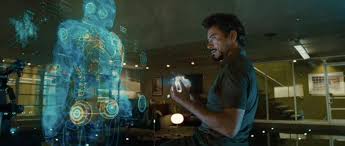
Side note: If they can depict the kind of technology described in the aforementioned videos, and seen in this clip from Iron Man, then why not in reality? If it has been done in reality, why is it not available to the masses?
Anyways, technology may have come far, but it still has a ways to go to match our imagination.
So, while watching these short videos, I determined that parts of this story were completely plausible with today's existing technologies, but other parts of the technology used may exist, but is not commonly used. Today video conferencing is completely plausible, and becoming quite common actually. We have Skype, we have Adobe Acrobat, and we have other such programs. However, accessing a school's database via voice command from your home computer seems a bit out of reach.
Side note: If they can depict the kind of technology described in the aforementioned videos, and seen in this clip from Iron Man, then why not in reality? If it has been done in reality, why is it not available to the masses?
Anyways, technology may have come far, but it still has a ways to go to match our imagination.
Friday, February 8, 2013
Chapter 6: World of Creative Imagination, or the Soul-drainer of Dread?
So, in a chapter of one of my "textbooks" for school, the author emphasizes the capturing of a classroom vision. He mentions several possible ways of capturing said vision, including (but not limited to) a flute solo, macaroni art, or interpretive dance. He then gives an entertaining scenario about the difficulties of making your vision mesh with the school's. This scenario involves a teacher in a unitard and a flute, declaring to the principal that his (the teacher's) classroom is a magical wonderland, and attempting to perform a dance move and pulling a muscle in the process.
Now, after your imagination has just processed the above scenario, I need to emphatically declare in three monosyllabic words: I don't dance. Having said that, I think we can safely rule out interpretive dance as a means of capturing my vision.
However, I see no reason why writing it down in this manner is not considered capturing the vision. Actually, one of the first recommended steps is to write down your vision. I took it one step further and organized it into the following breakdown:
Vision
/ \
Goals Objectives
|
Steps
Now there is something I must clarify. It is a quote from a forgotten source: "A goal not written is just a dream". Granted, Cinderella (the Disney version) does teach us that "a dream is a wish your heart makes," but how do you turn that wish into reality? You write it down, and start working towards it.
But is writing it down enough? No, it isn't. What good does it do you to write something and never look at it or read it again? So that is the next logical step after writing it down: remind yourself often of your vision by reading it and posting it where it can be seen. It may be helpful to enlist the aid of others in fulfilling your vision. This can be helpful because when you stray from your vision, others can slap you back onto the path your vision dictates.
So, basically, this chapter was all about how to make your vision appealing to your students, parents, and other teachers/administrators. Your vision can be one (if done right) that inspires learning, imagination and creation, in which the students will enjoy the atmosphere and want to return. On the other hand, you can also envision a classroom akin to The Trunchbull from Matilda that inspires fear and loathing. That may be an extreme example, but it serves its purpose.
Now, after your imagination has just processed the above scenario, I need to emphatically declare in three monosyllabic words: I don't dance. Having said that, I think we can safely rule out interpretive dance as a means of capturing my vision.
However, I see no reason why writing it down in this manner is not considered capturing the vision. Actually, one of the first recommended steps is to write down your vision. I took it one step further and organized it into the following breakdown:
Vision
/ \
Goals Objectives
|
Steps
Now there is something I must clarify. It is a quote from a forgotten source: "A goal not written is just a dream". Granted, Cinderella (the Disney version) does teach us that "a dream is a wish your heart makes," but how do you turn that wish into reality? You write it down, and start working towards it.
But is writing it down enough? No, it isn't. What good does it do you to write something and never look at it or read it again? So that is the next logical step after writing it down: remind yourself often of your vision by reading it and posting it where it can be seen. It may be helpful to enlist the aid of others in fulfilling your vision. This can be helpful because when you stray from your vision, others can slap you back onto the path your vision dictates.
So, basically, this chapter was all about how to make your vision appealing to your students, parents, and other teachers/administrators. Your vision can be one (if done right) that inspires learning, imagination and creation, in which the students will enjoy the atmosphere and want to return. On the other hand, you can also envision a classroom akin to The Trunchbull from Matilda that inspires fear and loathing. That may be an extreme example, but it serves its purpose.
Subscribe to:
Posts (Atom)