Here are some thoughts about the debate of "why didn't they take the Eagles to Mordor?" First, the Eagles' eyries were the wrong direction. You may recall that the eyries of the Great Eagles were to the east of Rivendell, in the middle of the Misty Mountains (which, by the way, were being overrun by orcs and goblins), and Mordor was to the south.
Second, how would they have gotten word of their request for transportation to the Eagles without attracting unwanted attention? You will recall that the only way to reach the eyries was by flying. Trying to get to the Eagles in order to ask them to take some Hobbits to Mordor would have been a perilous journey in and of itself, not to mention they didn't have time for it.
Third, the Eagles are a proud race who help when it suits them (more on that later), and who's to say whether they would have agreed or not?
The Eagles rescued the dwarves and Bilbo from the Orcs because they enjoyed ruining the sport of the orcs. Later, they carried Thorin & Co. to the Carrock in repayment of a debt to Gandalf. At the Battle of Five Armies, I see their assistance as pest control: They were ridding their mountain homes from creatures who were crowding out or destroying their food sources. Sixty years later, when Frodo was leaving Hobbiton, the Eagles had their own problems (orcs were encroaching on their territory again) and wouldn't have been able to help even if they wanted to.
It is unclear to me why they showed up at the Battle of the Black Gate. Perhaps they were not the Great Eagles of the Misty Mountains, but rather the Eagles of the White Mountains (which is a lot closer to Mordor). Or perhaps they started gathering after receiving word from Gandalf. Recall that Gandalf was rescued from Zirakzigil by Gwaihir the Windlord (who, if I remember correctly, was the Chief of the Eagles at this time). By that time, the Fellowship was on the river, being shadowed by winged Nazgul, making it difficult for the Eagles to meet up with them.
Remember, the Fellowship was supposed to be traveling in secret, and that is hard to do when riding on the backs of giant eagles. That is why they couldn't take the Eagles to Mordor.
Saturday, May 26, 2018

Tuesday, November 11, 2014
Games
The first games I played were embedded in the quest for the action games, kind of a shoot-'em-up type. The first (robotube) was frustrating because my shots weren't going where I wanted them to. The second (Asteroid)was more challenging to me. It took me a bit to figure out how to move my ship before I died, but once I did, I wanted to play again to try and beat my score. I didn't want to give up quite so easily as I did on the first game. Another frustrating thing about the first game is that I couldn't start a new game after I lost so I couldn't learn from my mistakes and do better.
Next set: Other Games. I played poker (which was embedded) and then I played Tiny Explorers. Poker seemed kind of mindless. I can see that being a game done in the background while listening to the teacher lecture. On a plus note, it can teach how to be careful with money. Tiny Explorerers is a quick thinking logic game where the user guides robot explorers safely to the exit. I say quick thinking because you have a time limit to get the robots to safety, and as you progress through the levels, the time limit remains the same but there are new obstacles to get around with each level. I rather enjoyed playing it, because it forced me to think on my feet to save the exploring robots. The benefits of such logic-building experience should be obvious
Round 3: Narrative Games. The first thing I want to say is that the game of Zork is incredibly frustrating to me. I struggled to find the right combinations and commands. However, my mastermind gaming quality grants me a measure of stubbornness that keeps me telling myself "I will beat this. I will not be defeated by a story!" Eventually, my frustration gets the better of me and I gave up trying to figure out the correct commands to yield results. On the other side, I can see the appeal this game has. It was fun (at first) to try and figure out the sequence of commands that would make the game progress. However, I found the lack of graphics to be a little disappointing. Part of the frustration came when Zork didn't do what I told him to. Flip side, it's a good exercise of the imagination.
Sim games: These can be fun. My frustration with the embedded game is that I could not figure out how to bring in revenue to increase my budget. Without that budget it was difficult to progress in the game. Without progress, it was nigh impossible to keep my interest in the game. That is all I have to say about that.
Other 2: Puzzle games: This is my niche. This is where I thrive. Tetris is awesome. It's just so fun to watch the lines disappear, especially when you complete three or four or even five at a time. It's gratifying, to say the least. However, that was nothing compared to the mental challenge of Construction Fall. I reveled each time I completed a level (even though I had to restart the level multiple times). The appeal is that it encourages creative experimentation, which can be useful in real life. And quite fun. Experimentation is part of success, which for me is the thrill of it. That is all.
Narrative 2: Peasant's Quest. I think the challenges/mini games are too difficult. I spent quite a bit of time trying to get a bow from the archers but never succeeded in getting three bull's-eyes. According to the walk-through I was using, acquiring the bow is essential for progress, so it's understandable how I can get frustrated. I have discovered that for narrative games, results and progress are what keep my interest. Without them, patience wanes,
Action 2:Zulu the elf was the example I provided. It was a fun little game where the elf gets chased by baddies and has to clear the obstacles. As you progress the levels get harder. For the other game, I looked for a mario game online (the embedded flash game wasn't working). That was a flashback to my childhood, where I could spend hours playing mario and trying to rescue the princess. (Well, I actually played other games, but I still spent hours on them). I have found that the best value for these games is as a stress-reliever. Sometimes you just need to jump on the baddies, or spit fire at them, to help you relax or unwind after a long day. It can be quite therapeutic as well.
Sim 2: Kingdom Rush is a fun little defense strategy game. The goal is to keep the villains away from your town by strategically placing different types of defense towers on the road. This game basically teaches you how to best use your assets on a limited budget and a time constraint. Kind of like some real life situations. I think real time strategy games are the most useful of the simulation games because you deal with factors from reality, like a budget and time. Depending on the game, it might also be useful in teaching historical concepts (I'm sure you could write a campaign for World of Warcraft, for example, that would reenact exactly how World War I got started). The creative teacher can figure out how to incorporate the simulation games into their lesson somehow. That is all.
Other Games 3: Line Rider. This game has potential for the sadistic person. I kept drawing loopdeloops hoping the rider was talented enough to perform according to my mental image. Much to the enjoyment of my sadistic side, it didn't quite work out. Depending on how well I drew it, sometimes he couldn't get up the curve and just kept sliding. Another time I did it well enough that he actually made it through the loopdeloop and kept on doing the same one. Eventually, he fell off his bike but kept going around and around. I can definitely see the appeal this game has, especially for teenagers. It is a source of humor to watch the rider fail a course. On the plus side, it can be a good tool to practice your art skills. Mine are seriously lacking, but it's more fun for me to watch the rider fail.
Action 3: First person Shooter: So I played Call of Duty for the first time on this one. I got annoyed with the inaccuracies of the map and where it showed my opponents in relation to me. I guess I focused more on the map and less on my surroundings and consequently I kept dying. However, compared with Doom, Call of Duty was infinitely more fun. I had more space to move and more controls to move with (I could run and jump and aim) in CoD but with Doom, I could barely figure out how to move and shoot anything in my way. With practice, I think Call of Duty would be fun, but it would be harder to put the fun in Doom.
Narrative 3: Zelda is by far my favorite kind of narrative game. It has what the other two have combined into one game. There is plenty of space to explore and it gives you hints if you're heading the wrong direction. It still has challenges but sometimes you can avoid cutting your way through to where you need to go, thus saving time and life. Best part? If you die, you can pick up more or less where you left off instead of having to start from the beginning. The game progresses by achieving objectives, and you can't move onto the next objective until you have completed the prior one. This would be a fun way to teach following progressive instructions (like if you wanted to build something). Now, speaking more from a child's viewpoint, it's a lot of fun to imagine you actually are Link trying to rescue Princess Zelda on this glorious quest. Instead of simply controlling the character, you essentially use your imagination to become the character (except when you die. Then it's ok to be the controller). That is all.
Action 4 Fighting Games: This is in my opinion one of the most pointless genre of games. I couldn't even figure out what buttons cause which effects, so consequently I lost most of my fights. I think the ones I did win were merely by luck. I can't even see how Street Fighter would be a good stress reliever. On the contrary, I think it would add stress and frustration to a novice (such as myself). Only with a lot of time consuming practice (which I don't have the patience for with this kind of game) can this type of game be fun for me.
Action 5 Driving: The Shut up and Drive game was a little too fiendish for me. Mainly because the controls wouldn't respond how they were supposed to. And then it seemed that no matter how many cars I overtook, I was still in 10th place. I thought your ranking was supposed to go up as you passed cars? It didn't seem to matter how many cars passed me either, I was permanently in 10th place. However, my example game Crazy Taxi, was a fun driving game. I started playing and thought to myself, "I want to ride in that taxi". Well, who wouldn't want to ride in a taxi that can jump over other cars? This is a good game for hand/eye coordination because if you jump too late you crash into the car in front of you and you have to slow down and try it again. That is all.
Monday, November 10, 2014
Forums
Because I am an avid Doctor Who fan (also known as whovians), I decided to look at a Doctor Who Forum. The one I joined has a subtitle of "Theories even more insane than what's actually happening". That should give you a sense of how... interesting... it is.
A lot of it is people presenting personal theories as to what will happen next, or what has happened, in the "who-niverse" concerning plot twists and character revelations. I guess that places it in the category of self-promotion. Because they are personal theories there is also a bit of controversy. In this case I am using the word controversy to mean that the theories don't always agree. But that's okay because the theorists don't seem to care.
On that note, there doesn't seem to be a lot of policing. A lot of shooting down theories (mainly people going back and rewatching and observing more carefully past episodes) and a lot of counter-theorizing, but like I said, no one seems to care. To me, it's just personal speculation about what may or may not happen in the series.
The other forum I looked at is Gilmore Girls. My wife likes that show, although I don't watch it. (That's Ok, though, because she doesn't watch Doctor Who). I just scratched the surface of the Gilmore Girls Forum, but it has a lot of similarities to the Doctor Who forum. They both have episode-specific subforums and most of the users have profile pictures that have something to do with their respective shows. One thing I did notice is that the Gilmore Girls forum seems to be a bit more organized and Doctor Who is just chaotic with the amount of replies and threads that it has.
So, that's a relatively comparative something-or-other on forums.
Saturday, October 25, 2014
Trolling
I've learned recently about trolling and other not-nice Internet techniques. When I first started reading, the first thing that came to my mind was a story my grandfather told us when we were kids. Reading about Internet trolls, I came to the conclusion that they are similar in nature to the troll under the bridge: All they want to do is cause trouble for others. I also thought that the best way to beat the troll is to be a better person than he or she is.
I don't hold well with people who try to belittle others, especially for their own amusement. Isn't there enough of that in the world? I think we need to be better than that. A better person lifts and helps others, they don't belittle and demean them.
Sometimes, it's best just to ignore an Internet troll. I think that if you ignore a troll for long enough, eventually they will get bored and move on to other things. In the meantime, the only defense we have against trolls is to be a better person. I have found that helping others to be happy is what helps me to be happy.
So how does one 'be the better person' in regards to Internet trolls? Well, that's where it gets tricky. If you ignore them, they just might continue trolling other people. On the other hand, if you respond to them, you fall into their trap and you've been trolled. My only advice is to use your best judgment, respond when you feel it necessary, but don't go overboard.
Monday, October 13, 2014
Memes
So the past couple of sessions of my Edtech class this semester have been about memes. At the end of our discussions I have a better understanding of what they are and why we use them. I even know how to pronounce it correctly now (I was somewhat ignorant about memes beforehand). One idea about memes that I enjoyed is that memes are 'really deep, or really really obvious'. Most memes take the form of a humor shot (Grumpy Cat, for example). Now I know why memes can be fun (also annoying, at times) to read and create. So if you start seeing a bunch of memes from me on the internet, now you know why (maybe).
Friday, September 19, 2014
Chapter 20: I believe!
“People don’t buy what
you do, they buy why you do it.” At least, that’s what Simon Sinek says. So I’ve
decided to put my ‘why’ in a form of belief statements.
I believe the family is
forever. I believe that really great music should be shared. I believe that
Doctor Who is one of the greatest shows ever written. I believe that ‘book-smarts’
are equally important as ‘street-smarts’. I believe that, if not handled
properly, religion and politics can spark contentious debates.
So, now I want to talk in
more detail about one of these belief statements. I believe that really great
music should be shared. I love the way harmonies and melodies work together to
create something beautiful. Some music has the power to make me smile just by
hearing it. Other music sounds fun. On the flip side, there is also music that
is so horrible it barely counts as music. However, in keeping with the law of
opposition, we must know bad music if we are to recognize the good stuff.
In the end, music is
awesome!
Saturday, September 13, 2014
Chapter 19: Digital Identity
So, the digital world is all around us. We have role playing games, we have business profiles, such as Linkedin. Most of all we have social networks, such as Facebook, or Twitter, or Instagram.
Have you ever thought about your digital profile? Your online presence? I have (recently), by watching some youtube videos and reading some articles. One of the articles I read stated that some employers are required to do online research about an applicant before he or she is hired. In that same article it talked about employers requiring employees/applicants to supply usernames and passwords to their social network sites. It talked about how this would allow the bosses to access information about you that you would rather keep private. It was also mentioned how this action of requiring passwords could influence the company in their hiring/firing decisions.
For employers to require usernames and passwords is, in my opinion, unethical. If a potential employer wants me to give them my username and password, I don't want to work for them. I do not feel comfortable giving them the power to change anything about my profile, or about them having access to personal information about my family.
The other article I read dealt extensively with Locke's Memory Theory. This theory states (in part) that if you have a memory of something, then you must have experienced it. According to the theory, the converse is also true: if you can't remember something, then you must not have experienced it.
I disagree. Memory fades for various reasons. We choose to forget. We grow older. Who among us remembers being a 1-year-old? Yet, obviously we were at some point or we would not be here now. Just because we can't remember a thing doesn't mean that we never experienced it. Another example would be dreams. Many is the time that I wake up, knowing that I dreamt, but retaining no memory of the details of said dream. The fact that I have no memory of the dream doesn't mean I didn't have it.
So, what does all this have to do with Digital Identity? How does this affect me and my online profile? I think that everybody can take steps to protect themselves. Personally, I plan on doing a little experiment. Let's call it 'unplugging'. this experiment will consist of 'unplugging' myself from technology (as far as possible. I am a college student in a digital age, after all. I still need to do homework) for a week or so and see how well I can live without it. Wish me luck!
Monday, March 24, 2014
Chapter 18: Following a Prophet
So, no one has actually asked me yet if I support gay marriage (no, I don't, for reasons I will explain in this chapter) but I am sure at some point they will. So this chapter is me trying to organize my thoughts and feelings on this and other pertinent matters.
As a member of the Church of Jesus Christ of Latter-day Saints, I firmly believe that "marriage between a man and a woman is ordained of God" and that "God has commanded that the sacred powers of procreation are to be employed only between man and woman, lawfully wedded as husband and wife." (The Family: A Proclamation to the World, emphasis added). This is from a Proclamation read by a prophet of God in 1995. I would like to point out that back then, the issue of gay marriage wasn't nearly as prominent as it is now. To me, that shows that God does indeed know what will happen and when, and He warns us, His children, through His prophets.
I believe that when God speaks on an issue, it shouldn't be necessary for Him to speak again. Sometimes, He will clarify an issue, and sometimes, because His children don't do what He asks, it becomes necessary for Him to repeat it. I mention this because after Christ was lifted up into heaven, the apostles spoke on this matter. In the Epistle to the Romans, Paul says this: "For this cause God gave them up unto vile affections: for even their women did change the natural use into that which is against nature: And likewise also the men, leaving the natural use of the woman, burned in their lust one toward another; men with men working that which is unseemly, and receiving in themselves that recompence of their error which was meet." (Romans 1:26-27). In our day, this message has been repeated by prophets and apostles. In October, 2013, Elder Dallin H. Oaks ( of the Quorum of the Twelve Apostles, a group of ranking leaders of the Church of Jesus Christ of Latter-day Saints) said, "Our twelfth article of faith states our belief in being subject to civil authority and “in obeying, honoring, and sustaining the law.” But man’s laws cannot make moral what God has declared immoral. Commitment to our highest priority—to love and serve God—requires that we look to His law for our standard of behavior. For example, we remain under divine command not to commit adultery or fornication even when those acts are no longer crimes under the laws of the states or countries where we reside. Similarly, laws legalizing so-called “same-sex marriage” do not change God’s law of marriage or His commandments and our standards concerning it. We remain under covenant to love God and keep His commandments." (No Other Gods, Dallin H. Oaks, November 2013 Ensign, emphasis added).
In its monthly magazine, the Ensign, the Church has published an article that is entitled The Lord's Standard of Morality. I encourage you to go and read it, because the points from it that I wish to make are too long to include in this post.
To continue with my reasoning, I will be using scriptures from the Bible, the Book of Mormon and the Doctrine and Covenants, all of which are accepted by me as the word of God, and by the Church as its official canon (Note: the official scriptural canon of the Church also includes the Pearl of Great Price, but I won't be quoting that in this chapter).
I testify that God calls prophets today to teach us His word and His will. In the Bible, an Old Testament prophet tells us "Surely the Lord God will do nothing, but he revealeth his secret unto his servants the prophets" (Amos 3:7). That is why I choose to follow the prophets, because I know that they will never lead me astray. In fact, they will lead me (and all of us) back to God.
I return for a moment to Elder Oaks' comments above. I would add to that this scripture from the Doctrine and Covenants: "Let no man break the laws of the land, for he that keepeth the laws of God hath no need to break the laws of the land" (Doc. & Cov. 58:21 emphasis added). I remind the reader that God's law is a higher law than man's law, and is a more sure way of receiving blessings from heaven.
All of this can be summed up in one phrase: the law of chastity. As I have explained, the principle of chastity is not a new one but it does come with blessings. But blessings only come by obedience: "There is a law, irrevocably decreed in heaven before the foundations of this world, upon which all blessings are predicated— And when we obtain any blessing from God, it is by obedience to that law upon which it is predicated" (Doc. & Cov. 130:21). I want to have the blessings from following the law of chastity, which is why I choose to obey the prophets.
You may be thinking that I have strayed from my original purpose but I have not. Let me sum up (and add a quote to) what I have already said. God has decreed that marriage is between a man and a woman. Anything else, such as gay marriage, is contrary to God's commandment. I have also stated (indirectly) that happiness comes from being obedient to God. For those of you who doubt this fact, "I would desire that ye should consider on the blessed and happy state of those that keep the commandments of God. For behold, they are blessed in all things, both temporal and spiritual; and if they hold out faithful to the end they are received into heaven, that thereby they may dwell with God in a state of never-ending happiness. O remember, remember that these things are true; for the Lord God hath spoken it" (Mosiah 2:41).
I realize that this post may be somewhat controversial and I may get a lot of negative comments about it, but I feel better about making my stance clear and supporting the Lord. To dispel the negativity slightly, I conclude with this final quote from the Bible, which you can apply equally to me: "And if it seem evil unto you to serve the Lord, choose you this day whom ye will serve...but as for me and my house, we will serve the Lord" (Joshua 24:15).
Thursday, December 12, 2013
Chapter 17: Christmas Spirit
President Thomas S. Monson said, "To catch the real meaning of the spirit of Christmas, we need only drop the last syllable, and it becomes the Spirit of Christ." One of my favorite Christmas stories illustrates this point extremely well. Maybe you've heard/read it. Maybe you haven't. If you have, it doesn't hurt to read it again. If you have not, please enjoy The Symbols of Christmas.

 "Teach them about the Christmas tree. Green is the second color of Christmas. The stately evergreen with its unchanging color represents the hope of eternal life in Jesus. Its needles point heavenward as a reminder that man's thoughts should turn heavenward as well."


 "The glow of the candle represents how man can show his thanks for the gift of God's Son that Christmas Eve long ago. Teach the children to follow in Christ's footsteps... to go about doing good. Teach them to let their lights shine before men that all may see it and glorify God. This is what is symbolized when the twinkling lights shine on the tree like hundreds of bright, shining candles, each of them representing one of God's precious children, their light shining for all to see."

 These are the things you must teach the children."
 If the children are taught these other things, there is no danger that I'll ever be forgotten."
Symbols of Christmas
Late one Christmas Eve I sank into my easy chair. Admiring the tree with its decorations, I couldn't help but feel that something was missing... The kids were in bed, the gifts were all wrapped, the milk and cookies were in their place for Santa. It wasn't long before the tiny twinkling tree lights lulled me into a deep sleep.
I don't know how long I slept, but all of a sudden I opened my eyes and there stood Santa Claus himself next to my Christmas tree.

He was dressed all in fur from his head to his foot just as the poem described him. But he was not the "jolly old elf" of Christmas legend. The man who stood before me looked sad and disappointed with tears in his eyes.
I had to ask, "Santa, what's wrong? Why are you crying?" "It's the children," Santa replied sadly. "But the children love you," I said. "Oh, I know they love me and the gifts I bring them," Santa said. "But the children of today seem to have somehow missed out on the true spirit of Christmas. It's not their fault. It's just that the adults, many of them not having been taught themselves, have forgotten to teach the children."
"Teach them what?" I asked. Santa's kind old face became soft, more gentle. His eyes began to shine with something more than tears. He spoke softly. "Teach the children the true meaning of Christmas. Teach them that the part of Christmas we can see, hear and touch is much more than meets the eye. Teach them the symbolism behind the customs and traditions of Christmas we now observe. Teach them what it is they truly represent."
Santa reached into his bag and pulled out a tiny Christmas tree and set it on the fireplace mantle.

Santa reached into his bag again and pulled out a shiny star and placed it at the top of the small tree. "The star was the heavenly sign of promise. God promised a Savior for the world and the star was the sign of the fulfillment of that promise of the night that Jesus Christ was born. Teach the children that God always fulfills His promises and that the wise will still seek Him."

"Red," said Santa, "is the first color of Christmas." He pulled forth a red ornament for the tiny tree. "Red is deep, intense, vivid. It is the color of the life giving blood that flows through our veins. It is the symbol of God's greatest gift. Teach the children that Christ gave His life and shed his blood for them that they might have eternal life. When they see the color red it should remind them of that most wonderful gift."

Santa found a bell in his pack and placed it on the tree. "Just as lost sheep are guided to safety by the sound of the bell, it continues to ring today for all to be guided to the fold. Teach the children to follow the true Shepherd who gave His life for the sheep."
Santa placed a candle on the mantle and lit it. The soft glow from its one tiny flame brightened the room.

Again, Santa reached into his bag and this time he brought forth a tiny red and white striped candy cane. As he hung it on the tree, he spoke softly, "The candy cane is a stick of hard, white candy. White to symbolize the virgin birth and sinless nature of Jesus. The shape 'J' to represent the precious name of Jesus who came to earth as our Savior. It also represents the crook of the Good Shepherd which he uses to reach down into the ditches of the world to lift out the fallen lambs who, like sheep, have gone astray. The original candy cane had three small red stripes which are the stripes of the scourging Jesus received by which we are healed, and a large red stripe that represents the shed blood of Jesus so that we can have eternal life. Teach these things to the children."

Santa brought out a beautiful wreath made of fresh fragrant greenery and tied with a bright red bow. "The bow reminds us of the bond of perfection which is love. The wreath embodies all the good things about Christmas for those with eyes to see and hearts to understand. It contains the colors of red and green and the heaven turned needles of the evergreen. The bow tells the story of good will towards all and its color reminds us of Christ's sacrifice. Even the wreath's very shape is symbolic, representing eternity and the eternal nature of Christ's love. It is a circle without beginning and without end.

"But where does that leave you Santa?" I asked. The tears gone now from his eyes, a smile broke over Santa's face. "Why, bless you, my dear," he laughed. "I, too, am only a symbol. I represent the spirit of family fun and the joy of giving and receiving.
"I think I'm beginning to understand at last," I replied. That's why I came," said Santa. "You're an adult. If you don't teach the children these things, then who will?"
-Author unknown-
In this season of commercialization of Christmas, let us teach our children (and adults) to remember the Spirit of Christ. I testify that Jesus Christ is the reason for the season. I know He lives and I know His gospel is true.
Friday, August 9, 2013
Chapter 16: Good vs. Evil
While watching a TV show recently, and remembering a comment that a friend made a while ago, I have come to the conclusion that whenever there is a fight between good and evil, it is never a one-on-one fight.
Good never fights alone, and Evil never has friends. Let me also say that I am arguing with the assumption that Good has multiple primary heroes, whereas Evil generally has only one primary villain.
If you think about it, you realize I am right. Let me elaborate with examples from a few classic books. Harry Potter had his friends Hermione and Ron and Hagrid (to name a few). Sure, Voldemort had his Death Eaters, but were they really his friends? They were more like his slaves. Also, think back to the last book, where Harry and Voldemort were duking it out and Voldemort "kills" Harry and they end up in what Harry describes as the train station. Harry had Dumbledore (who for the sake of argument I will say represented all of Harry's friends), but Voldemort was alone.
Next example: Chronicles of Narnia. In the first book, the White Witch kills Aslan. Lucy and Susan were nearby. However, when Aslan returns the favor, she dies alone.
Next: Lord of the Rings. The primary heroes are the Nine Walkers, and the primary villain is Sauron. You can argue that Saruman was a primary villain, and I will (somewhat) allow it, because they were in different parts of the world with different purposes.
Now I come to the comment that a friend made to me once. This friend had made the observation that in every book/movie is...I believe the word I am searching for is archetypical... of Jesus Christ, in that everybody needs a Savior, or in other words, someone (a hero) to do what nobody else can.
To elaborate this point, I return to the previous examples. Harry Potter was "the Chosen One". Frodo was the Ringbearer. Aslan died to save a traitor. All of these characters did something that nobody else could do.
I conclude this chapter by saying that there may be flaws and gaping holes in this theory of mine, but I don't really care. It is nothing more than the interesting ramblings of an interesting mind.
Wednesday, June 19, 2013
Chapter 15: Movie Music
This chapter may be shorter than some of the others, but that's okay. It makes for easier reading.
I am of the correct opinion that music can make or break a movie. If you think about all the movies you've seen, you will agree that I am right.
Some time ago, my wife and I watched a horrible movie. This movie was called Chronicle. It had no plot, very little special effects, no credits, and absolutely no music whatsoever. Basically, it looked as if a couple of kids had picked up a camera and started filming with no idea what they were doing. Now, maybe if they had had some music it might have been better (although I rather doubt it). The point is they had no music and so "broke" the movie and ruined it for us.
On the other hand, you have the movies that everybody loves: Star Wars, Lord of the Rings, Harry Potter, Pirates of the Caribbean, and so forth. Why does everybody love these movies? Because the music made them exciting. Every time something exciting, creepy, eerie, or sentimental happens in a movie, the music is there to back it up and intensify the emotion.
So to summarize, I repeat what I proclaimed at the beginning of this chapter. Music can make or break a movie.
Monday, June 10, 2013
Chapter 14: Idiomatic expressions from a Veggie's point of view
Some of you may be wondering about the title of this chapter. At the end of this chapter, the title will become clear (I hope).
Anyways, some of the idioms that we use in American English can sound somewhat ridiculous if you think about them. I will include a list of some idiomatic expressions, along with my thoughts on some (not all) of them.
First is the phrase "up a creek without a paddle". Personally, I would rather be up a creek than down it because downstream, or down the creek if you will, is where all the waterfalls are. But if you are up a creek, you still have time to get to shore before arriving at said waterfalls.
Next, the term 'pet peeve'. You can have pet dogs, cats, rats or any other animal. You can even have pet rocks! So now imagine the absurdity of having a pet peeve. Can you put a leash on it and take it for a walk? What does it eat/drink?
I follow that with the phrase "drive me up the wall" or "drive me crazy". They mean the same thing, they are just different ways of saying it. If something (or someone) is driving you crazy, I just say one thing: Take away its license. If that doesn't work, take away the keys. Then you must question when and how did this person or object learn to drive?
Next on the list is 'shoot the breeze'. This presents to me a rather comical mental picture of a redneck hillbilly (stereotypical of course) with a shotgun aimed at the wind that's gusting through his yard. Need I say more?
Some other expressions are "head over heels" and 'train of thought', along with a classic "human race". "Head over heels" makes me think of a loaf of bread, and the thought of bread that has a head is just creepy. I know that you can make bread into shapes including heads, but that's different.
Switching gears now (which by the way is another idiomatic expression that sounds ridiculous). My wife showed me a video of what I will call a rant about vegetables. This made me think of a song I heard years ago that goes along the same lines. So I included it in a video playlist, and then added one more video that goes with the phrase "train of thought". So hopefully you now understand the title of this chapter...
Thursday, May 16, 2013
Chapter 13: Zoo Wisdom and Other Stuff
So, while reading the scriptures with my wife the other night, we came across a verse in the Book of Mormon that intrigued me. The verse was Alma chapter 2, verse 5. (For those of you who don't know, the Book of Mormon is a book of scripture for The Church of Jesus Christ of Latter-Day Saints, more commonly known as Mormons). So this chapter is talking about a man who wanted to be king, but an election denied him. The verse in question reads thusly: "And it came to pass that the people assembled
themselves together throughout all the land, every man according to his
mind, whether it were for or against Amlici, in separate bodies, having
much dispute and wonderful contentions one with another." Amlici was the man who wanted to be king. The phrase that caught my attention is "wonderful contentions". Since when are contentions wonderful? Later in the Book of Mormon, the Savior Himself teaches that "contentions are not of me, but are of the devil" (see 3 Nephi 11:29). Wouldn't that imply that contentions are the opposite of wonderful?
Like I said, I was intrigued, and so I decided to research the word wonderful as it would have meant in the year 1830 (which is when the Book of Mormon was translated and published). I came across an 1828 version of a Dictionary of the English Language, which gave me this definition of the word 'wonderful': Adapted to excite wonder or admiration; exciting surprise; strange; astonishing.
I chose to focus on the word 'strange', so when you replace wonderful with strange, the verse makes sense to me. Just so you know, that is one of my methods of studying something I don't quite understand.
On to other things. My family's recent excursions to the zoo inspired me to watch (again) the movie We Bought a Zoo. I found three nuggets of wisdom that I am choosing to include here. Nugget #1: Girls will talk to you about anything. The secret to talking is listening. I think it should be fairly obvious why I chose that nugget.
Nugget #2: Sometimes, all you need is 20 seconds of insane courage. This nugget actually goes well with something you can read in Chapter 3 of this blog.
Nugget #3 is something you'll have to puzzle out for yourself, if you can: "Why not?" You might have better luck understanding this nugget if you actually watch the movie...
On a final note, I have completed my Teaching Technology Portfolio, which I have been working on all semester. It is here for those who wish to view, comment, and/or criticize. Thus concludes Chapter 13.
Wednesday, April 17, 2013
Chapter 12: Inspiration and Creativity
This is something that one of my early professors taught at BYU-Idaho. I had forgotten about it until now. Well, that's not entirely true. I had put it on my Facebook notes, which is where I found it recently. After forgetting about it entirely, I found it again. I am putting it now in this blog so that it is more accessible to everyone who wishes to view it. Enjoy the reading. Feel free to disagree or agree as you choose.
1. All truly inspired ideas come from God, and the consciousness of being inspired by him. Your religiosity will make you more conscious and aware of that fact, and of the fact that God is nearer to you than others in your craft, and that you can consort with him without fear.
2. The contact of inspiration though God cannot be done merely by will power working through the conscious mind, which is an evolutionary product of the physical realm and perishes with the
body. It can only be accomplished by the soul-powers within - the real ego that survives bodily
death. Those powers are quiescent to the conscious mind unless illumined by Spirit.
3. To realize that we are one with the Creator, as Beethoven did, is a wonderful and awe-inspiring experience. Very few human beings ever come into that realization and that is why there are so few great composers or creative geniuses in any line of human endeavor. All this should always be contemplated before commencing to compose. This is the first step.
4. When the urge to compose is present, appeal directly to the Maker and ask Him three most
important questions pertaining to our life here in this world - whence, wherefore, whither [woher, warum, wohin]? This appeal will immediately manifest feelings of vibrations that will thrill your whole being. These are the Spirit illuminating the soul-power within, and in this exalted state, you can clearly see what is obscure in your ordinary moods; then you feel capable of drawing inspiration from above, as Beethoven did. These vibrations assume the forms of distinct mental images, after you have formulated your desire and resolve in regard to what you want - namely, to be inspired so that you can compose something that will uplift and benefit humanity - something of permanent value. Straightaway the ideas will flow upon you, directly from God, and not only should you see distinct themes in you mind's eye, but they also will be clothed in the right forms, harmonies and orchestration. Only with divine inspiration will finished product be revealed to you, measure by measure.
5. Most of the time you have to be or will be in a semi-trance condition to get such results - a
condition when the conscious mind is in temporary abeyance and the subconscious mind, which is part of Omnipotence, that the inspiration comes; and to be careful, however, not to lose
consciousness, otherwise the ideas will fade away. That is the way Mozart composed, and when asked what the process was with him while composing, he replied: "The process with me is like a vivid dream". He then went on and described how ideas, clothed in the proper musical setting, streamed down upon him. God and His Omnipotence, His awe-inspiring grandeur. His glory, and above all his closeness to you are things that should be pondered on just before commencing to compose. It is most stimulating and inspiring process to think along those lines before entering that trance-like state in which inspirations come.
6. The dream-like state is like entering a trance-like condition - hovering between being asleep and awake; you are still conscious but right on the border of losing consciousness, and it is at such moments that inspired ideas come. Then it is of the utmost importance to put the ideas down on paper immediately. Then they are fixed and cannot escape; and when you look as them again, they conjure up that same mood that gave them birth. This is a very important law. Themes that occur this way usually are the ones that will endure.
7. Spirit is the light of the soul. Spirit is universal. Spirit is the creative energy of the Cosmos. The soul of man is not conscious of it's powers until it is enlightened by Spirit. Therefore, to evolve and grow, man must leam how to use and develop his own soul forces. All great creative geniuses do this, although some of them do not seem to be as conscious of the process as others. Beethoven was aware of the fact that he was inspired and he left records to that effect.
8. All true inspiration emanates from God, and can reveal Himself through that spark of divinity
within - through that psychologists call the subconscious mind. Any composer capable of entering into that state can create immortal works, only in believing in which no less an authority than Jesus, Himself, says, in John 14:10 "The Father that dwelleth in Me,
He doeth the works, and in the 12th Verse of the same chapter. He adds, "He that believeth Me, the works that I do shall he do also, and greater works than these shall he do". All these things mentioned here have a direct bearing on the mental, psychic and spiritual processes when attempting to compose. The powers from which all truly great composers like Mozart, Schubert, Bach and Beethoven drew their inspirations is the same powers that enabled Jesus to perform His miracles. We call it God, Omnipotence, Divinity, the Creator, etc. It is a power of All that created our earth and the whole universe, and Jesus taught us that we can appropriate it for our own upbuilding right here and now and also earn Eternal Life. Jesus is very explicit in Matthew 7:7, saying, "Ask and it shall be given you, seek and ye shall find; knock and it shall be opened unto you". There would not be so much good music paper wasted in fruitless attempts to compose if those great precepts were better understood. That is why atheists works are utterly lacking in inspiration. Their works are purely cerebral. The great Nazarene knew that law also, and He proclaimed it in John 15:4, "The branch cannot bear fruit of itself, except it abide in the vine." No atheist has ever been or will be a great composer. Jesus taught us that there is true supreme hope for all. He came not as the great exception, but as the great example for us to emulate. Adherence to can create nothing but divine values and an alliance with the Creator, that is capable of a life on earth full of inspiration and masterpieces of music to accompany that life for others to witness. This is the secret of inspiration; which is the ability to synchronize the conscious and subconscious minds, just as Jesus did, but on a much higher level.
9. Inspiration is of such importance in composing, but by no means all that there is to it. Structure is just as consequential, for without craftsmanship, inspiration is a 'mere reed shaken in the wind' or 'sounding brass or tinkling cymbals'. Great compositions are not the fruits of inspiration alone, but of severe, laborious and painstaking toil. No composition will live long unless it has both inspiration and craftsmanship, which Beethoven had to a superlative degree. There also must be in relation, with inspiration and craftsmanship, a natural aptitude, where ideas come to you with more or less no conscious effort, with a sense of comfort and relative ease, like a aspiration beingfulfilled. But parallel to that, as seen in Beethoven's sketchbooks, comes the proof that he toiled incessantly in order to leave us such masterpieces. Only with your religiosity. God's inspiration, and the utilization of all three, can one achieve mastery of classical music composition and achieve true fame and immortality, which is what oblivion constantly tries to challenge. This is the proven universal formula for success in music and any and all other endeavors of human life.
10. Another aspect of this art which is extremely vital and demands great emphasis, is privacy. It should be unthinkable of attempting to compose unless you are sure you will not be interrupted or disturbed. The Muse is a very jealous entity, and she will fly away on the slightest provocation.
11. A composer who wishes to write worth-while music must devote his whole time and energy to that one occupation.
12. A composer in order to study, learn and absorb all that the masters have to offer, and put to use that knowledge in his own works, must have the capacity to judge objectively an individuality that differs from his own.
Tuesday, April 16, 2013
Chapter 11: Reflections (and ramblings) of Assistive Technology
So in order to help you understand the comments of this chapter, I have placed the source of my ideas in this blog. It is a video playlist about assistive technology. I think watching this video will help my ramblings make more sense. Be warned, this video playlist will take about 15-20 minutes-ish to watch fully. So watch the video (if you dare), then enjoy the ramblings.
So, the first person I want to ramble about is Lukas. Lukas is just awesome. He was born with a disease with a jaw-cracking name. I'm not even going to try to pronounce (or spell) it. But this disease did not stop him from learning to play euphonium! His assistive technology was a joystick that pressed the valves of his instrument because his limbs were too weak to do so themselves. By using this technology, he was able to participate in three different ensembles. That's the kind of student dedication I like to see!
Susanna, the first person mentioned in these videos, is a more common case. She uses a voice activated system on her laptop to help her do her homework. Voice activation is one of the more common tools that can be applied for assistive technology. Susanna impressed me with her ability to referee soccer from a wheelchair. Isn't that cool?
Vishal used an on-screen keyboard to type his homework, which I think is becoming more and more common as technology advances. Years ago, touch-screen technology (which makes an on-screen keyboard possible) did not exist. I am sure that all these students are grateful for these devices, because without them, schoolwork would have been much more difficult and stressful.
I am going to skip to the second video now, and ramble about Josh. Josh just wanted to read, but lacked the capability, until his teacher showed him Bookworm, and then he rapidly caught up to the rest of his class. It was kind of interesting to see how they discovered his interests and devised methods of permitting him to express those interests. What I thought was really cool, though, was how these devices actually improved his performance in the classroom and his sociability both in the home and at school.
OK, I think that's enough rambling for now. If my ramblings made sense without the videos, great. If not, watch the videos and then come back and see things click into place in your mind.
Monday, March 11, 2013
Chapter 10: Music at its best
Enclosed in this chapter is an annotated video playlist that I created using the services of Youtube. The title of the playlist (and this chapter) is "Music at its best". I think the title says it all. It includes a video of a 3-year-old conductor, a recording of one of the best pieces of music ever written, and my own annotated video comments. Enjoy.
Annotated Youtube Playlist
Annotated Youtube Playlist
Monday, February 25, 2013
Chapter 9: Spreadsheets in the Classroom
After viewing a number of presentations teaching the use of spreadsheets, I can't figure out for the life of me how I would change these 'lessons' to fit the needs of my future band students. So I took a different approach, and decided to change them for my (future) Spanish students. This was much easier.
It seemed to me that the lesson I could most easily adapt to Spanish was a presentation on volcanoes. This lesson had the students look up some basic information about specific volcanoes, and input that info into a spreadsheet in order to create some graphs of comparison.
Now, I believe that volcanoes are very different from a foreign language. However, the principles taught using the spreadsheet are somewhat the same. Instead of the question, "how often does a volcano erupt?" I can ask the question, "what is the ratio of Spanish-speaking countries to the rest of the world?" Then I can show that information in a graph to make it easier to interpret.
I said that I couldn't figure out a musical application, but I figured a different spreadsheet might work better. So I used my own M&M Spreadsheet and changed it for instruments in the band room: How many of each instrument do I have, and how many of each instrument do I need? Or rather, how many players will I need? This could be useful at the start of the year when I am not sure what instrumentation I will have (student-wise that is) so I can show the students what I have and what I need. Then I would be able to ask students if they would like to learn a different instrument than one they already play and switch things up a bit. It is entirely possible that at our first rehearsal, I will have 20 French horns and zero tubas (yikes!). I can show this data to the students and ask for their cooperation and reduce the number of horns and put them on different, more necessary instruments (such as a bassoon).
I'm sure that I could figure out other ways to use a spreadsheet in a band room, given enough time and motivation, but those are things that I am somewhat lacking at present.
Wednesday, February 20, 2013
Chapter 8: Technology
My teacher went to a conference somewhere where some new, interactive technology was being modeled. There were three technologies that were being modeled: a Smart board, some 3D modeling technology, and a Smart Table.
The Smart board is in some classrooms already, but the expert who was modeling it demonstrated the different useful functions, such as 'multi-touch'. First of all, as a music teacher, a Smart board can be very beneficial in teaching theory and rhythm or even key signatures. Second, this 'multi-touch' feature would allow a teacher to create friendly competition between students. Personally, since I will be teaching high school band/music classes, I think using a music composition software in conjunction with the Smart board would be useful for a competition. It might be nice to see who can harmonize a melody faster, or more accurately. The Smart board/ composition software combo would be a very good way to show improvisation. I kind of like the idea of writing a melody on the spot without prior preparation.
Anyways, the 3D technology would be useful if you want to create your own instruments and/or take it apart without actually damaging the instrument. For instance, if a students wants to figure out how to re-string a French horn they can use this technology to figure out what string goes where and how it is attached to everything else before attempting it on their actual instrument. Side note: a student in my classroom should never, ever try to re-string a horn on their own. Take it to a professional, because there is less chance of irreparable damage. Like I said, this technology can be useful for looking at the interior of instruments (don't try it on an actual instrument!) or for designing new ones.
The Smart Table is more or less for cooperation and collaboration. I can't see a use for it in rehearsals or practicing, but composition is another matter entirely. Or if students need help with theory homework, they can collaborate with other students to figure out different ways of writing music without breaking any rules.
On an end note (no pun intended.... I don't think...), I think the Smart board would be the technology of choice in my classroom, but the Smart Table comes in a close second.
Friday, February 15, 2013
Chapter 7: Education's Future
Technology has come a long way, but has it come far enough? I guess that depends on the next question: "far enough to accomplish what?" Back in the 80's, there were some videos made about the classroom of the future. These short videos detailed an assignment of a high school track star who was stuck at home with a broken leg. The video however, purveyed the idea that the student was still able to participate in class via video conferencing, and how he was assigned a partner to do a research project for the following day. For his part of the assignment, this crippled track star accessed the school database via voice commands and found an article that interested him and shared it with his partner over the computer.
So, while watching these short videos, I determined that parts of this story were completely plausible with today's existing technologies, but other parts of the technology used may exist, but is not commonly used. Today video conferencing is completely plausible, and becoming quite common actually. We have Skype, we have Adobe Acrobat, and we have other such programs. However, accessing a school's database via voice command from your home computer seems a bit out of reach.
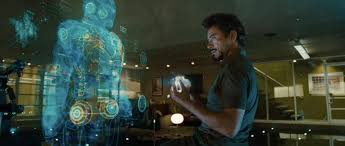
Side note: If they can depict the kind of technology described in the aforementioned videos, and seen in this clip from Iron Man, then why not in reality? If it has been done in reality, why is it not available to the masses?
Anyways, technology may have come far, but it still has a ways to go to match our imagination.
So, while watching these short videos, I determined that parts of this story were completely plausible with today's existing technologies, but other parts of the technology used may exist, but is not commonly used. Today video conferencing is completely plausible, and becoming quite common actually. We have Skype, we have Adobe Acrobat, and we have other such programs. However, accessing a school's database via voice command from your home computer seems a bit out of reach.
Side note: If they can depict the kind of technology described in the aforementioned videos, and seen in this clip from Iron Man, then why not in reality? If it has been done in reality, why is it not available to the masses?
Anyways, technology may have come far, but it still has a ways to go to match our imagination.
Friday, February 8, 2013
Chapter 6: World of Creative Imagination, or the Soul-drainer of Dread?
So, in a chapter of one of my "textbooks" for school, the author emphasizes the capturing of a classroom vision. He mentions several possible ways of capturing said vision, including (but not limited to) a flute solo, macaroni art, or interpretive dance. He then gives an entertaining scenario about the difficulties of making your vision mesh with the school's. This scenario involves a teacher in a unitard and a flute, declaring to the principal that his (the teacher's) classroom is a magical wonderland, and attempting to perform a dance move and pulling a muscle in the process.
Now, after your imagination has just processed the above scenario, I need to emphatically declare in three monosyllabic words: I don't dance. Having said that, I think we can safely rule out interpretive dance as a means of capturing my vision.
However, I see no reason why writing it down in this manner is not considered capturing the vision. Actually, one of the first recommended steps is to write down your vision. I took it one step further and organized it into the following breakdown:
Vision
/ \
Goals Objectives
|
Steps
Now there is something I must clarify. It is a quote from a forgotten source: "A goal not written is just a dream". Granted, Cinderella (the Disney version) does teach us that "a dream is a wish your heart makes," but how do you turn that wish into reality? You write it down, and start working towards it.
But is writing it down enough? No, it isn't. What good does it do you to write something and never look at it or read it again? So that is the next logical step after writing it down: remind yourself often of your vision by reading it and posting it where it can be seen. It may be helpful to enlist the aid of others in fulfilling your vision. This can be helpful because when you stray from your vision, others can slap you back onto the path your vision dictates.
So, basically, this chapter was all about how to make your vision appealing to your students, parents, and other teachers/administrators. Your vision can be one (if done right) that inspires learning, imagination and creation, in which the students will enjoy the atmosphere and want to return. On the other hand, you can also envision a classroom akin to The Trunchbull from Matilda that inspires fear and loathing. That may be an extreme example, but it serves its purpose.
Subscribe to:
Posts (Atom)